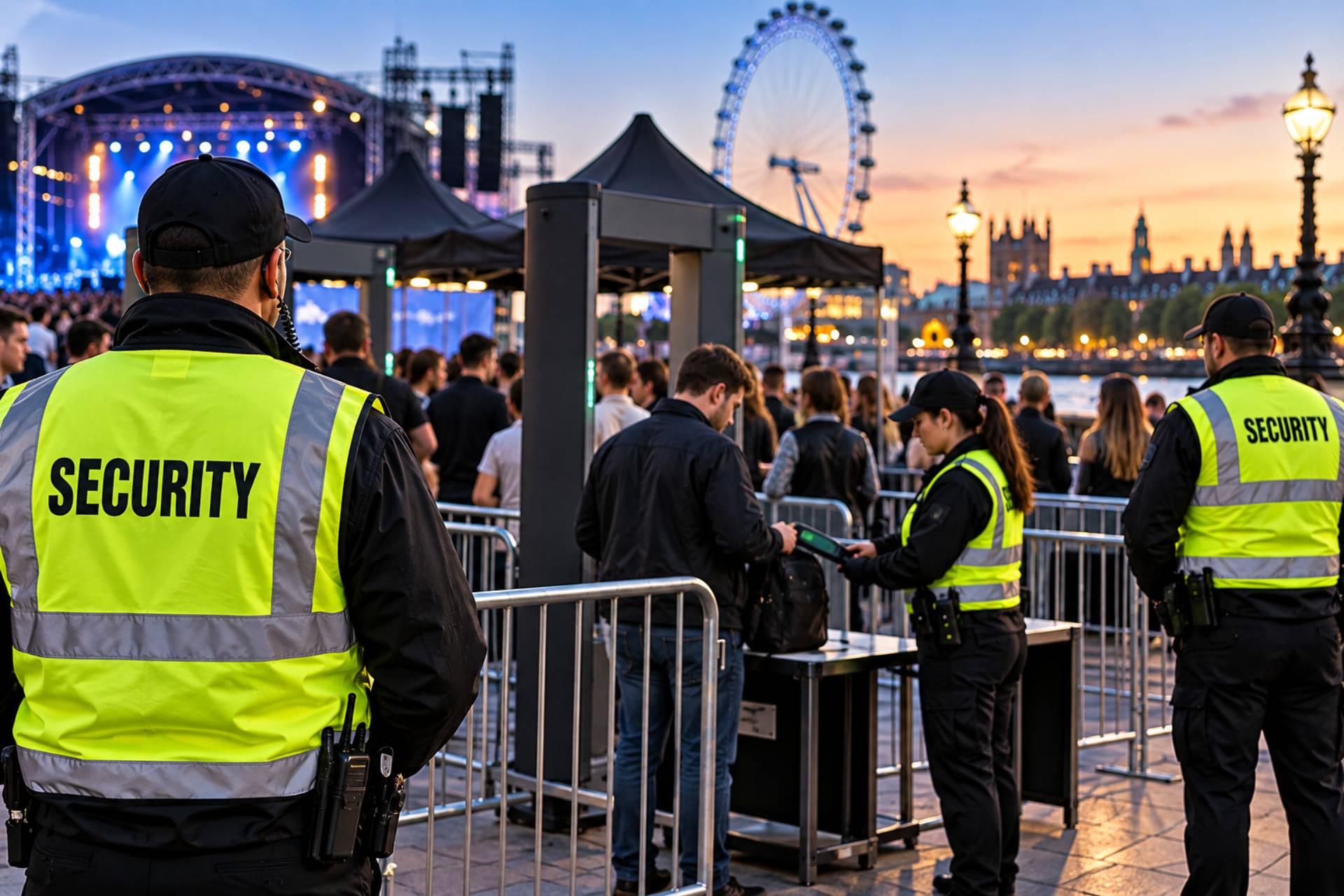
Event security planning starts long before doors open. London venues vary in size, layout, access arrangements and surrounding transport links, so a workable plan should reflect the specific event rather than rely on a standard formula. The aim is to identify where people, vehicles, staff and restricted areas may create pressure, then decide how security resources should be positioned.
For organisers considering event security in London, the best starting point is a clear picture of expected attendance, venue layout, entry conditions, timings and any higher-risk areas. These details shape staffing levels, access control, crowd movement, screening arrangements and communication between security personnel and the wider event team.
Why Staffing Numbers Should Be Risk-Led
There is no single staffing ratio that suits every event. Two venues with the same number of guests may need different security arrangements because their entrances, floor plans, audience profiles, operating hours or access restrictions are different.
Staffing should therefore follow a risk assessment. Organisers need to consider how many entrances will operate, whether tickets or passes must be checked, whether bag searches are required, how many restricted areas need cover, and how people will leave at the end. Vehicle access, loading areas and car parks can add separate staffing requirements.
It is also important to distinguish between roles. Security guards, access-control staff, gate attendants and ushers can have different responsibilities. Treating everyone as one general security number can leave tasks without clear ownership.
Divide the Venue Into Practical Security Zones
Breaking a venue into zones makes planning easier because each area can be assessed according to its purpose and risk. A useful plan should show where people enter, where they can move freely and where access must be controlled.
Typical zones may include:
- Public entrances and ticket-checking points.
- Queuing and screening areas.
- Main audience or guest spaces.
- Backstage, production or technical areas.
- VIP, staff-only or contractor areas.
- Vehicle gates, loading points and car parks.
- Emergency exits and evacuation routes.
Each zone should have a defined purpose, responsible personnel and a clear communication method. This reduces confusion when conditions change and helps the event team understand who is responsible for a particular area.
Plan Entry and Screening Around Throughput
Entry is one of the most important timing issues. If many people arrive at once, even a well-managed venue can develop long queues or pressure at screening points. Planning should therefore consider when guests are likely to arrive, how many entry lanes can operate and what checks are required.
Ticket checks, accreditation, bag searches and other screening measures all affect throughput. The more checks required, the more time and space need to be allowed. Organisers should also plan for guests with accessibility requirements, contractors carrying equipment and authorised personnel using separate entrances.
For event security in London, coordination between venue staff, organisers and security teams can be important where entrances open onto busy pavements, roads or shared public spaces. Queue layouts should avoid blocking emergency access or interfering unnecessarily with pedestrian movement.
Use Timings to Build the Security Plan
A security plan should cover the full operational period, not only the hours when guests are present. Staff may be needed before opening for site checks, contractor access and deliveries. Cover may also be required afterwards while guests depart and restricted areas remain active.
Key timings include staff arrival, briefing time, contractor access, guest admission, programme start, intervals, last entry, event finish and final site closure. Changes to these times can affect shift lengths, handovers and the number of people needed at specific posts.
Briefings should take place before public access begins. Staff need time to understand their post, communication method, escalation route, emergency procedures and event-specific restrictions.
Pay Attention to Crowd Movement and Exit Pressure
Crowd management is not limited to the main entrance. Movement between rooms, seating areas, bars, toilets, cloakrooms and transport exits can create short periods of congestion.
Particular attention should be given to narrow routes, stairways, temporary barriers and places where pedestrian flows cross. Security and stewarding arrangements should support safe movement without making the venue difficult to use.
The end of an event also needs careful planning. Large numbers of people may leave at once while taxis, coaches and collection traffic arrive nearby. Exit staffing should remain in place until the main flow has cleared and controlled areas can be safely stood down.
Define Access Control Before the Event
Restricted areas should be agreed before staff arrive. Passes, wristbands, guest lists or other credentials need to be easy for authorised staff to recognise and difficult to misunderstand.
Backstage areas, technical spaces, storage rooms, offices and loading zones may each need different access rules. The plan should explain what staff should do when a person has the wrong credential, no credential or a request that falls outside normal procedures.
Clear access rules help security personnel make consistent decisions and reduce delays caused by uncertainty.
Coordinate Security With the Wider Event Team
Security works best when it is integrated with venue management, production, front-of-house staff and emergency arrangements. Everyone should know who has decision-making responsibility, how incidents are reported and how urgent information will be shared.
Professional advice can be useful when an event has multiple access points, high attendance, complex screening requirements, controlled zones or significant vehicle movements. A site-specific assessment can help identify practical issues that may not be obvious from plans alone.
Overall Summary
Effective event security planning depends on getting three things right: numbers, zones and timings. Staffing should reflect actual risks and duties, venue areas should have clear responsibilities, and security coverage should match the full event schedule rather than just public opening hours.
When arranging event security in London, organisers should confirm attendance expectations, access rules, screening needs, crowd routes, vehicle movements and emergency arrangements as early as possible. A clear written plan, an early briefing and defined responsibilities can make the event easier to manage and support consistent decisions throughout the day.